

 Same Day Tyre Fitting Available
 93 Nationwide Fitting Centres
 5 Year Warranty On All Tyres
 Price Check Promise. Always Great Deals
Tyre Sizes
HOW TO CHECK YOUR TYRE SIZE
You can find your car’s tyre size written on the sidewall of your current set of tyres, in your vehicle’s handbook or on a sticker in the door jam or inside the fuel cap door. When buying new tyres you should only go for ones that have these same numbers to ensure a good fit

HOW TO CHECK YOUR TYRE SIZE
You can find your car’s tyre size written on the sidewall of your current set of tyres, in your vehicle’s handbook or on a sticker in the door jam or inside the fuel cap door. When buying new tyres you should only go for ones that have these same numbers to ensure a good fit
HOW TO CHECK YOUR TYRE SIZE
You can find your car’s tyre size written on the sidewall of your current set of tyres, in your vehicle’s handbook or on a sticker in the door jam or inside the fuel cap door. When buying new tyres you should only go for ones that have these same numbers to ensure a good fit
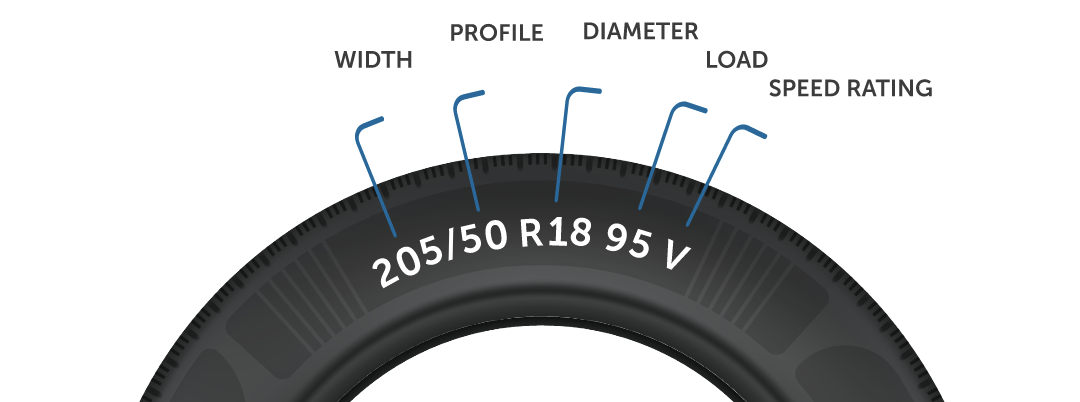
How to check your tyre size
You can find your car’s tyre size written on the sidewall of your current set of tyres, in your vehicle’s handbook or on a sticker in the door jam or inside the fuel cap door.
The diagram on the right shows an example of how tyre measurements are displayed. In this case: 205/50 R18 95V. Each part represents:
- Width: This shows the tyre width in mm (here 205)
- Profile: This shows the profile of the tyre as a percentage of its width (here 50%)
- Diameter: This shows the diameter of the wheel the tyre fits in inches (here 18)
- Load: This shows the maximum load capacity rating
- Speed Rating: This shows the speed rating of the tyre
You can enter these measurements into our tyre finder to quickly locate the most suitable tyres for your vehicle.
Find Your Tyre Size
- 165 / 60 / R15
- 165 / 65 / R15
- 175 / 55 / R15
- 175 / 60 / R15
- 175 / 65 / R15
- 185 / 55 / R15
- 185 / 60 / R15
- 185 / 65 / R15
- 195 / 50 / R15
- 195 / 55 / R15
- 195 / 60 / R15
- 195 / 65 / R15
- 195 / 70 / R15
- 195 / 80 / R15
- 205 / 50 / R15
- 205 / 60 / R15
- 205 / 65 / R15
- 205 / 70 / R15
- 215 / 65 / R15
- 215 / 70 / R15
- 225 / 70 / R15
- 235 / 75 / R15
- 235 / 70 / R15
- 175 / 50 / R15
- 215 / 75 / R15
- 195 / 45 / R15
- 185 / 50 / R16
- 185 / 55 / R16
- 185 / 60 / R16
- 185 / 75 / R16
- 195 / 45 / R16
- 195 / 50 / R16
- 195 / 55 / R16
- 195 / 60 / R16
- 195 / 65 / R16
- 195 / 75 / R16
- 205 / 45 / R16
- 205 / 50 / R16
- 205 / 55 / R16
- 205 / 60 / R16
- 205 / 65 / R16
- 205 / 75 / R16
- 205 / 80 / R16
- 215 / 45 / R16
- 215 / 55 / R16
- 215 / 60 / R16
- 215 / 65 / R16
- 215 / 70 / R16
- 215 / 75 / R16
- 225 / 50 / R16
- 225 / 55 / R16
- 225 / 60 / R16
- 225 / 65 / R16
- 225 / 70 / R16
- 225 / 75 / R16
- 235 / 60 / R16
- 235 / 65 / R16
- 235 / 70 / R16
- 235 / 85 / R16
- 245 / 70 / R16
- 245 / 75 / R16
- 255 / 70 / R16
- 265 / 70 / R16
- 175 / 60 / R16
- 205 / 70 / R16
- 175 / 80 / R16
- 255 / 50 / R16
- 205 / 40 / R17
- 205 / 45 / R17
- 205 / 50 / R17
- 205 / 55 / R17
- 215 / 40 / R17
- 215 / 45 / R17
- 215 / 50 / R17
- 215 / 55 / R17
- 215 / 60 / R17
- 215 / 65 / R17
- 225 / 45 / R17
- 225 / 50 / R17
- 225 / 55 / R17
- 225 / 60 / R17
- 225 / 65 / R17
- 235 / 45 / R17
- 235 / 50 / R17
- 235 / 55 / R17
- 235 / 60 / R17
- 235 / 65 / R17
- 245 / 40 / R17
- 245 / 45 / R17
- 245 / 65 / R17
- 255 / 40 / R17
- 255 / 65 / R17
- 265 / 65 / R17
- 265 / 70 / R17
- 205 / 60 / R17
- 225 / 40 / R17
- 245 / 70 / R17
- 285 / 70 / R17
- 255 / 45 / R17
- 215 / 35 / R17
- 245 / 75 / R17
- 235 / 40 / R17
- 195 / 60 / R18
- 205 / 40 / R18
- 215 / 35 / R18
- 215 / 40 / R18
- 215 / 45 / R18
- 215 / 50 / R18
- 215 / 55 / R18
- 225 / 35 / R18
- 225 / 40 / R18
- 225 / 45 / R18
- 225 / 50 / R18
- 225 / 55 / R18
- 225 / 60 / R18
- 235 / 40 / R18
- 235 / 45 / R18
- 235 / 50 / R18
- 235 / 55 / R18
- 235 / 60 / R18
- 235 / 65 / R18
- 245 / 35 / R18
- 245 / 40 / R18
- 245 / 45 / R18
- 245 / 50 / R18
- 245 / 60 / R18
- 255 / 35 / R18
- 255 / 40 / R18
- 255 / 45 / R18
- 255 / 55 / R18
- 255 / 60 / R18
- 255 / 70 / R18
- 265 / 35 / R18
- 265 / 60 / R18
- 275 / 35 / R18
- 275 / 40 / R18
- 245 / 55 / R18
- 275 / 45 / R18
- 205 / 45 / R18
- 205 / 55 / R19
- 215 / 50 / R19
- 225 / 35 / R19
- 225 / 40 / R19
- 225 / 45 / R19
- 225 / 50 / R19
- 225 / 55 / R19
- 235 / 35 / R19
- 235 / 40 / R19
- 235 / 45 / R19
- 235 / 50 / R19
- 235 / 55 / R19
- 245 / 35 / R19
- 245 / 40 / R19
- 245 / 45 / R19
- 245 / 50 / R19
- 255 / 30 / R19
- 255 / 35 / R19
- 255 / 40 / R19
- 255 / 45 / R19
- 255 / 50 / R19
- 255 / 55 / R19
- 265 / 30 / R19
- 265 / 35 / R19
- 265 / 50 / R19
- 275 / 30 / R19
- 275 / 35 / R19
- 275 / 40 / R19
- 275 / 45 / R19
- 275 / 55 / R19
- 285 / 30 / R19
- 285 / 40 / R19
- 285 / 45 / R19
- 255 / 65 / R19
- 155 / 70 / R19
- 265 / 55 / R19
- 235 / 60 / R19
- 295 / 30 / R19
- 195 / 55 / R20
- 215 / 45 / R20
- 225 / 35 / R20
- 235 / 35 / R20
- 235 / 40 / R20
- 235 / 45 / R20
- 235 / 50 / R20
- 235 / 55 / R20
- 245 / 30 / R20
- 245 / 35 / R20
- 245 / 40 / R20
- 245 / 45 / R20
- 245 / 50 / R20
- 255 / 30 / R20
- 255 / 35 / R20
- 255 / 40 / R20
- 255 / 45 / R20
- 255 / 50 / R20
- 255 / 55 / R20
- 265 / 30 / R20
- 265 / 35 / R20
- 265 / 40 / R20
- 265 / 45 / R20
- 265 / 50 / R20
- 275 / 30 / R20
- 275 / 35 / R20
- 275 / 40 / R20
- 275 / 45 / R20
- 275 / 50 / R20
- 275 / 55 / R20
- 285 / 30 / R20
- 285 / 35 / R20
- 285 / 40 / R20
- 285 / 45 / R20
- 285 / 50 / R20
- 295 / 30 / R20
- 295 / 35 / R20
- 295 / 40 / R20
- 305 / 30 / R20
- 305 / 40 / R20
- 315 / 35 / R20
- 295 / 45 / R20
- 325 / 35 / R20
- 155 / 60 / R20
- 225 / 40 / R20
- 305 / 35 / R20
- 255 / 60 / R20
- 235 / 45 / R21
- 245 / 35 / R21
- 245 / 40 / R21
- 255 / 35 / R21
- 255 / 40 / R21
- 265 / 35 / R21
- 265 / 40 / R21
- 265 / 45 / R21
- 275 / 30 / R21
- 275 / 35 / R21
- 275 / 40 / R21
- 275 / 45 / R21
- 285 / 30 / R21
- 285 / 35 / R21
- 285 / 40 / R21
- 285 / 45 / R21
- 295 / 30 / R21
- 295 / 35 / R21
- 295 / 40 / R21
- 305 / 30 / R21
- 315 / 30 / R21
- 315 / 35 / R21
- 315 / 40 / R21
- 325 / 30 / R21
- 185 / 35 / R21
- 245 / 30 / R21
- 255 / 45 / R21
- 245 / 45 / R21
Load Rating
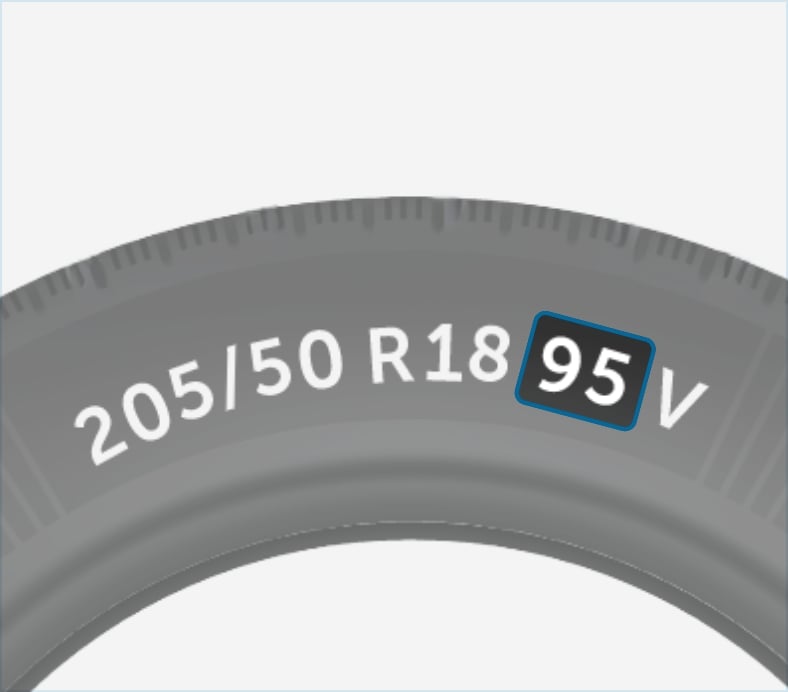
On a tyre’s sidewall, the load rating appears between the rim diameter and the speed rating.
This number shows the maximum weight the tyre can safely carry when inflated to the correct pressure. It relates to the tyre’s carrying capacity — not its actual weight. To see the exact load limit for your tyres, simply check the load rating chart to the right
Load Index |
Load (KG) |
| 62 | 265 |
| 63 | 272 |
| 64 | 280 |
| 65 | 290 |
| 66 | 300 |
| 67 | 307 |
| 68 | 315 |
| 69 | 325 |
| 70 | 335 |
| 71 | 345 |
| 72 | 355 |
| 73 | 365 |
| 74 | 375 |
| 75 | 387 |
| 76 | 400 |
| 77 | 412 |
| 78 | 425 |
| 79 | 437 |
| 80 | 450 |
| 81 | 462 |
Load Index |
Load (KG) |
| 82 | 475 |
| 83 | 487 |
| 84 | 500 |
| 85 | 515 |
| 86 | 530 |
| 87 | 545 |
| 88 | 560 |
| 89 | 580 |
| 90 | 600 |
| 91 | 615 |
| 92 | 630 |
| 93 | 650 |
| 94 | 670 |
| 95 | 690 |
| 96 | 710 |
| 97 | 730 |
| 98 | 750 |
| 99 | 775 |
| 100 | 800 |
| 101 | 825 |
Load Index |
Load (KG) |
| 102 | 850 |
| 103 | 875 |
| 104 | 900 |
| 105 | 925 |
| 106 | 950 |
| 107 | 975 |
| 108 | 1000 |
| 109 | 1030 |
| 110 | 1060 |
| 111 | 1090 |
| 112 | 1120 |
| 113 | 1150 |
| 114 | 1180 |
| 115 | 1215 |
| 116 | 1250 |
| 117 | 1285 |
| 118 | 1320 |
| 119 | 1360 |
| 120 | 1400 |
| 121 | 1450 |
Load Index |
Load (KG) |
| 121 | 1450 |
| 122 | 1500 |
| 123 | 1550 |
| 124 | 1600 |
| 125 | 1650 |
| 126 | 1700 |
| 127 | 1750 |
| 128 | 1800 |
| 139 | 1850 |
| 130 | 1900 |
| 131 | 1950 |
| 132 | 2000 |
| 133 | 2060 |
| 134 | 2120 |
| 135 | 2190 |
| 136 | 2240 |
| 137 | 2300 |
| 138 | 2360 |
| 149 | 2430 |
| 140 | 2500 |
Speed Rating
The final letter in a tyre code indicates its speed rating — the maximum speed the tyre can safely handle when fitted to a vehicle.
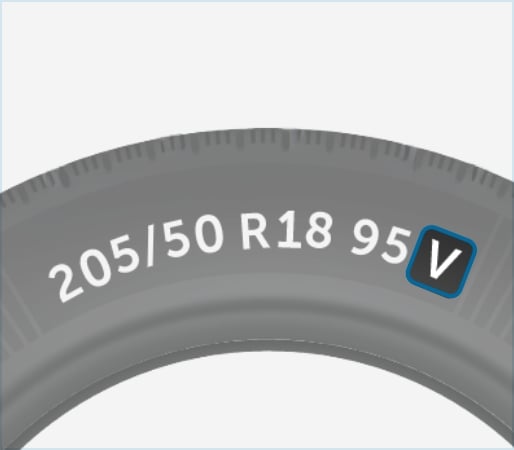
Speed ratings are set through strict testing, where tyres are run at controlled speeds and gradually increased until the maximum safe limit is confirmed.
WHY DOES THIS MATTER?
Fitting tyres with a lower speed rating than your vehicle requires can affect safety and may even invalidate your car insurance. Always check the speed rating before buying new tyres to ensure they match your vehicle’s specifications.
Speed Symbol |
Max Speed (MPH) |
Max Speed (KM/H) |
| L | 75 | 120 |
| M | 81 | 130 |
|
N |
87 | 140 |
|
Q |
99 | 160 |
|
R |
106 | 170 |
|
S |
112 | 180 |
Speed Symbol |
Max Speed (MPH) |
Max Speed (KM/H) |
| T | 118 | 190 |
| U | 124 | 200 |
|
H |
130 | 210 |
|
V |
149 | 240 |
|
W |
168 | 270 |
|
Y |
186 | 300 |
Tyre Labelling
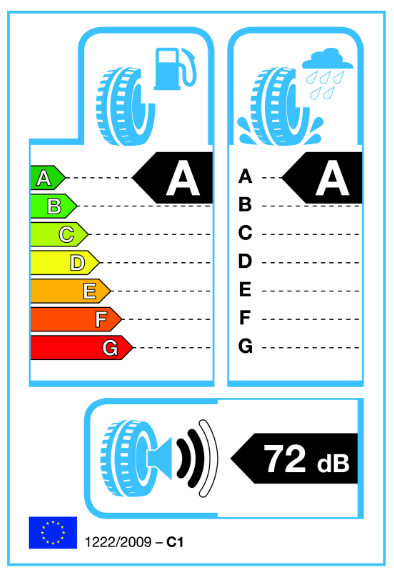
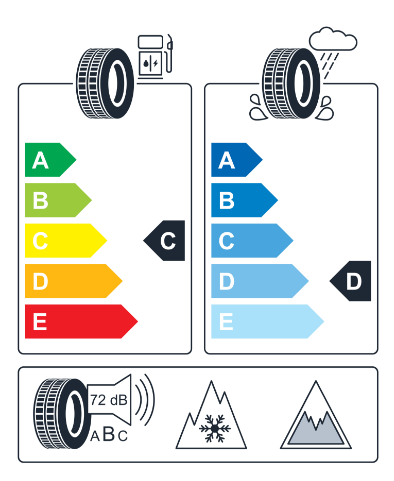
Since 1st July 2012, EU regulations have required all tyres sold in Europe to carry a performance label.
This label is designed to help drivers compare tyres more easily and understand how they may affect safety, efficiency, and comfort.
The label grades three key areas:
FUEL EFFICIENCY
- Rated from A (most efficient) to G (least efficient) — similar to household appliances.
- Choosing a higher-grade tyre can reduce fuel consumption by up to 80 litres over its lifetime, saving you money and lowering emissions.
WET BRAKING PERFORMANCE
- Also graded from A (shortest stopping distance) to G (longest).
- Each grade difference can add the equivalent of one to two car lengths to your stopping distance, making higher-rated tyres a much safer choice.
EXTERNAL NOISE
Measured in decibels (dB) and shown with sound wave symbols:
- One black wave = low noise
- Two black waves = average noise
- Three black waves = above EU-permitted level
Frequently Asked Questions
Tyre size affects handling, braking, and overall vehicle stability. Using the wrong size can lead to poor grip, increased wear, and even damage to the suspension or drivetrain.
Worn tyres reduce traction, especially in wet conditions, increasing the risk of skidding or hydroplaning. They also compromise braking performance and can lead to blowouts.
The legal minimum is 1.6mm across the central three-quarters of the tyre. However, many experts recommend replacing tyres at 3mm for optimal safety.
Ideally, inspect your tyres monthly and before long journeys. Look for tread depth, pressure, cracks, bulges, or uneven wear.
Yes — underinflated tyres can overheat and wear unevenly, while overinflated tyres reduce grip and increase the risk of impact damage.
Common signs include low tread depth, visible damage (cuts, bulges), vibration while driving, or tyres older than 6 years, even if they appear fine.
 Find a Centre